
“Walk Through the Land Where Islamic History Lives.”
For centuries, Iraq has remained one of the most important destinations for Islamic pilgrimage. It is the resting place of many Prophets (AS), Imams (AS), scholars, and revered personalities whose lives shaped Islamic history. Every year, millions of pilgrims travel from across the world to seek blessings, deepen their faith, and connect with this sacred heritage.
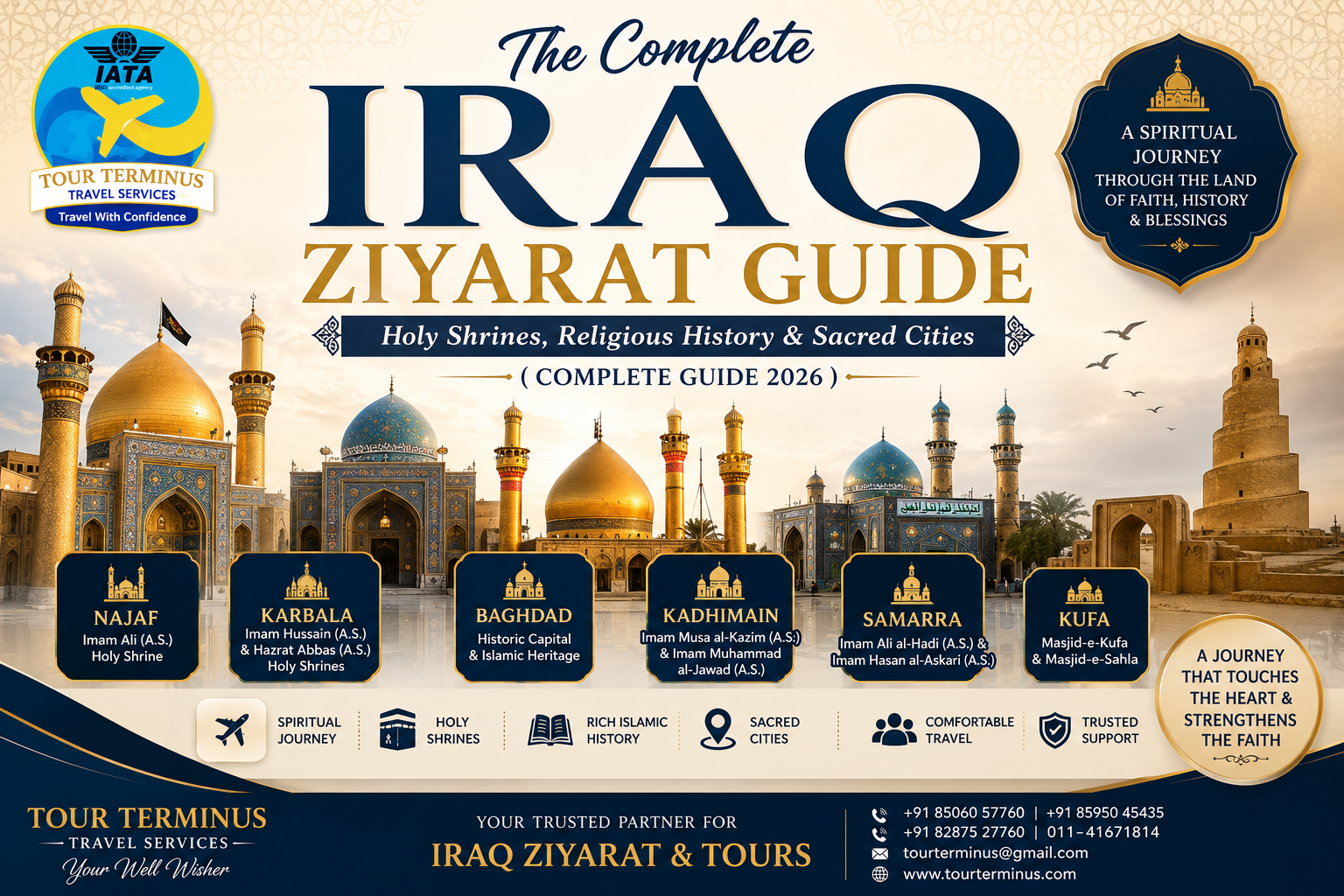
Unlike many religious destinations where only one or two holy sites are located, Iraq offers an extraordinary spiritual journey across several historic cities. Within a single trip, pilgrims can visit Najaf, Karbala, Baghdad, Kadhimain, Samarra, and Kufa—each preserving centuries of Islamic history.
This guide explains the significance of Iraq Ziyarat, introduces the major sacred cities, and provides an overview of the holy shrines that make Iraq one of the world’s most cherished pilgrimage destinations.
What is Iraq Ziyarat?
The word “Ziyarat” means to visit with respect and devotion. In the Islamic tradition, it refers to visiting the resting places of Prophets, Imams, and righteous personalities to offer prayers, reflect on their teachings, and strengthen one’s spiritual connection.
For many believers, Iraq is not simply a travel destination—it is a place of remembrance, learning, and inner peace.
Why is Iraq Considered So Sacred?
Iraq occupies a unique place in Islamic history because it is associated with numerous significant events and personalities. The region witnessed the lives of Prophets, the leadership of the Imams, the establishment of early centers of Islamic scholarship, and events that continue to inspire Muslims around the world.
Pilgrims come to Iraq to:
- Offer prayers at sacred shrines.
- Learn about Islamic history.
- Visit important historical mosques.
- Explore the legacy of the Ahlul Bayt (AS).
- Experience a deeply spiritual atmosphere.
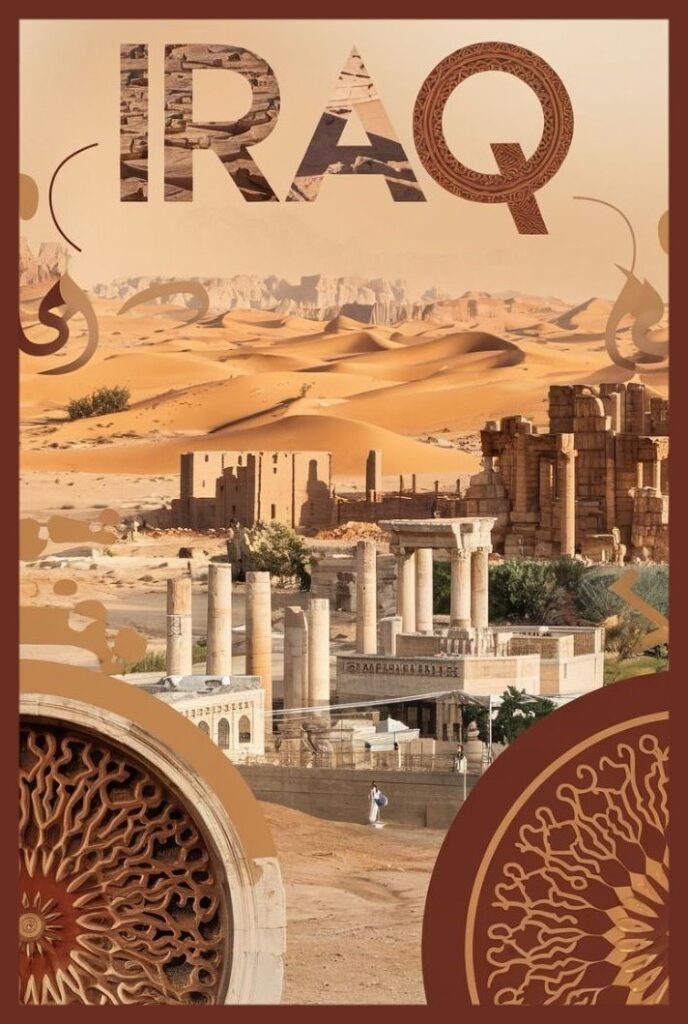
The Sacred Cities of Iraq
1. Najaf – The City of Knowledge
Najaf is one of the holiest cities in the Islamic world and serves as a major center of religious learning. It is home to one of the largest seminaries (Hawza) in the world, attracting scholars and students from many countries.
Highlights
- Beautiful shrine complex
- Historic old city
- Traditional bazaars
- Religious libraries
- Islamic schools
- Pilgrim-friendly hotels
- Peaceful spiritual environment
Most international Ziyarat tours begin in Najaf due to its international airport and excellent facilities for pilgrims.
2. Karbala – The City of Sacrifice
Karbala is among the most visited pilgrimage destinations in the world. Throughout the year, millions of visitors gather here to remember the timeless values of faith, justice, patience, and courage associated with the historic events connected to this city.
Highlights
- Magnificent shrine complexes
- Spiritual atmosphere
- Religious lectures
- Traditional markets
- Family-friendly pilgrim services
- Beautiful Islamic architecture
The city becomes especially vibrant during major Islamic occasions, although it welcomes pilgrims year-round.
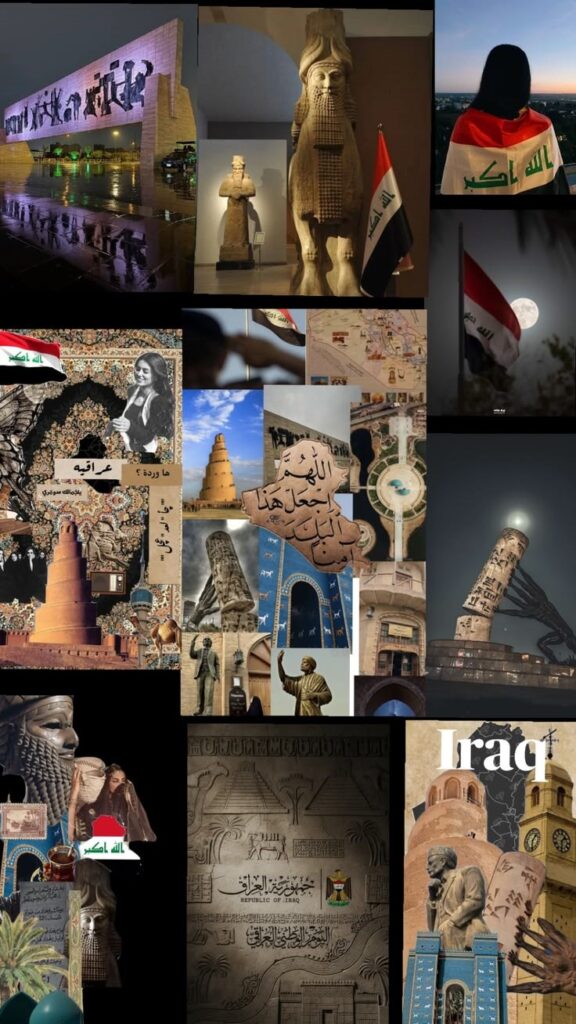
3. Baghdad – The Historic Capital
Baghdad has been one of the great centers of Islamic civilization for centuries. It combines rich history with modern city life and serves as an important stop on many Iraq pilgrimage itineraries.
Attractions
- Historic mosques
- Museums
- Traditional souqs
- Riverfront views
- Islamic heritage sites
- Modern hotels
4. Kadhimain
Located within Baghdad, Kadhimain is one of the most revered spiritual destinations in Iraq.
Pilgrims visit this historic district to pray, reflect, and experience its peaceful surroundings.
5. Samarra
Samarra is renowned for its religious significance and remarkable Islamic architecture.
It remains an essential part of many organized Iraq Ziyarat tours.
6. Kufa
Kufa is one of the oldest cities in Islamic history and holds a special place due to its historical mosques and scholarly heritage.
Visitors often include Kufa in their Najaf itinerary because of its close proximity.
Major Holy Shrines in Iraq
Iraq is home to several of the most important shrines in Islamic history. Among the most visited are:
- Shrine of Imam Ali (AS) – Najaf
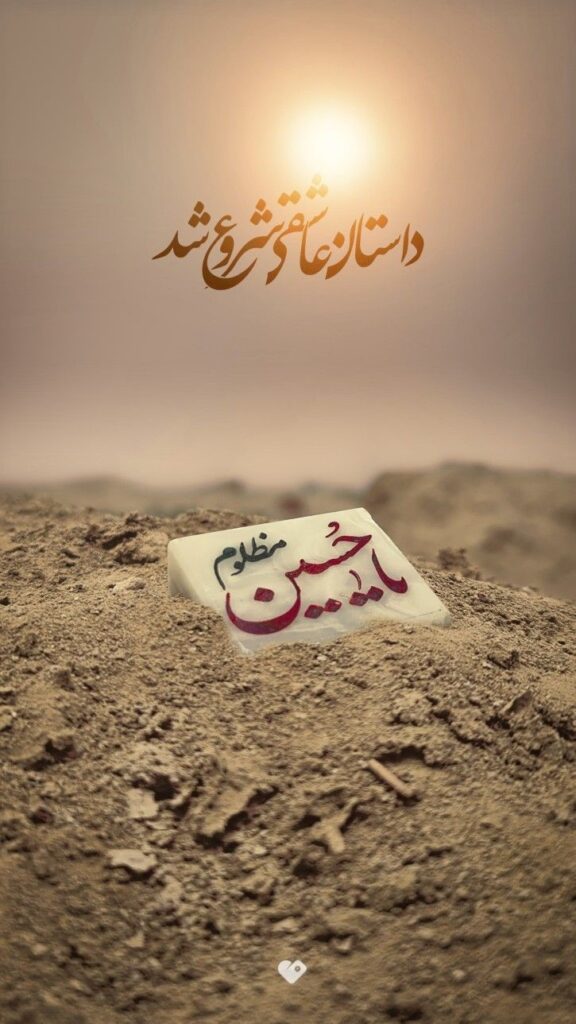
- Shrine of Imam Hussain (AS) – Karbala
- Shrine of Hazrat Abbas (AS) – Karbala
- Shrine of Imam Musa al-Kazim (AS) – Kadhimain
- Shrine of Imam Muhammad al-Jawad (AS) – Kadhimain
- Shrine of Imam Ali al-Hadi (AS) – Samarra
- Shrine of Imam Hasan al-Askari (AS) – Samarra
- Masjid-e-Kufa
- Masjid-e-Sahla
Each site offers visitors an opportunity for prayer, reflection, and learning about Islamic history.
Religious History of Iraq
The land of Iraq has witnessed many defining moments in Islamic civilization.
Some of its historical contributions include:
- Early Islamic governance
- Centers of religious scholarship
- Development of Islamic sciences
- Preservation of Arabic literature
- Influential seminaries
- Historic mosques and libraries
For centuries, scholars from around the world have traveled to Iraq to study theology, jurisprudence, philosophy, and Arabic language.
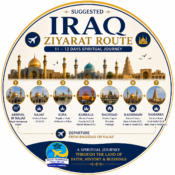
A Typical Iraq Ziyarat Route (11–12 Days)
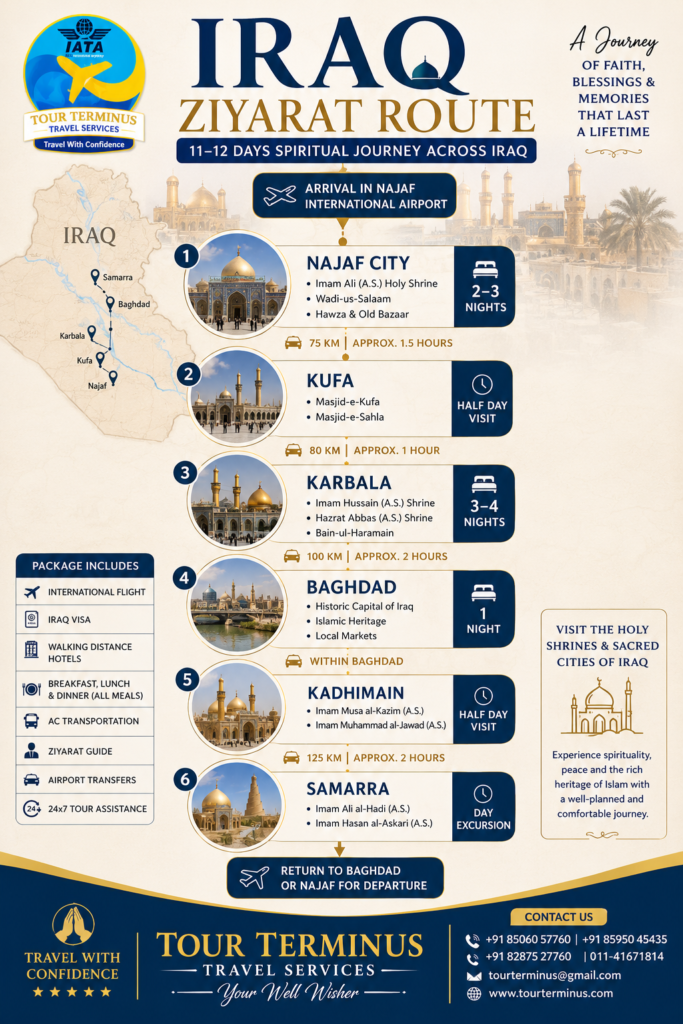
🕌 IRAQ ZIYARAT ROUTE
11–12 Days Spiritual Journey Across Iraq
✈️ Arrival in Najaf International Airport
⬇️🕌 NAJAF
- Imam Ali (A.S.) Holy Shrine
- Wadi-us-Salaam
- Hawza & Old Bazaar
📅 2–3 Nights
⬇️ 75 km | Approx. 1.5 Hours
🕌 KUFA
- Masjid-e-Kufa
- Masjid-e-Sahla
📍 Half Day Visit
⬇️ 80 km | Approx. 1 Hour
🕌 KARBALA
- Imam Hussain (A.S.) Shrine
- Hazrat Abbas (A.S.) Shrine
- Bain-ul-Haramain
📅 3–4 Nights
⬇️ 100 km | Approx. 2 Hours
🏛️ BAGHDAD
- Historic Capital of Iraq
- Islamic Heritage
- Local Markets
📅 1 Night
⬇️ Within Baghdad
🕌 KADHIMAIN
- Imam Musa al-Kazim (A.S.)
- Imam Muhammad al-Jawad (A.S.)
📍 Half Day Visit
⬇️ 125 km | Approx. 2 Hours
🕌 SAMARRA
- Imam Ali al-Hadi (A.S.)
- Imam Hasan al-Askari (A.S.)
📍 Day Excursion
⬇️✈️ Departure
Baghdad Airport or Najaf Airport
⭐ Package Includes
✔ International Flight
✔ Iraq Visa
✔ Walking Distance Hotels
✔ Breakfast, Lunch & Dinner
✔ AC Transportation
✔ Ziyarat Guide
✔ Airport Transfers
✔ 24×7 Tour Assistance
This route allows pilgrims to comfortably visit the major sacred cities while also experiencing Iraq’s rich cultural heritage.
Spiritual Experience Beyond the Shrines
One of the most memorable aspects of an Iraq Ziyarat is the atmosphere created by the local people.
Pilgrims often experience:
- Warm hospitality
- Community meals
- Religious gatherings
- Beautiful recitations
- Traditional Iraqi cuisine
- Historic markets
- Friendly local interactions
Many travelers return not only because of the sacred places but also because of the kindness and generosity they encounter throughout their journey.
Tips for First-Time Pilgrims
- Carry comfortable walking shoes.
- Dress modestly and respectfully.
- Keep your passport and identification secure.
- Stay hydrated, especially during warmer months.
- Travel with an experienced tour operator for smoother logistics.
- Follow local customs and guidance at religious sites.
- Plan sufficient time at each shrine for prayer and reflection.
Frequently Asked Questions (FAQs)
Is Iraq only for religious travelers?
No. While Ziyarat is the primary reason many visitors travel to Iraq, the country also offers historical landmarks, museums, traditional markets, and cultural experiences.
How many days are ideal for Iraq Ziyarat?
An 11–12 day itinerary is generally considered ideal to visit the major sacred cities comfortably.
Which city should I visit first?
Most international pilgrims begin their journey in Najaf due to the availability of flights and its proximity to several important sites.
Can families travel to Iraq?
Yes. Organized tours are available for families, senior citizens, and group travelers, offering comfortable accommodations and transportation.
Final advice:
An Iraq Ziyarat is more than a pilgrimage—it is a journey through centuries of faith, history, and civilization. From the peaceful streets of Najaf to the historic significance of Karbala, from the scholarly heritage of Kufa to the sacred sites of Baghdad and Samarra, every destination offers a unique spiritual and cultural experience.
Whether you are planning your first visit or returning once again, Iraq welcomes pilgrims with timeless history, profound spirituality, and heartfelt hospitality.
In the next blog of this series, we will explore Iraq Beyond Ziyarat, including its culture, cuisine, UNESCO heritage sites, local traditions, historical landmarks, and why Iraq is emerging as a destination for cultural tourism as well.
Contact: Tour Terminus Travel Services
📞 +91 85060 57760 | +91 85950 45435
+91 82875 27760 | ☎ 011-41671814
tourterminus@gmail.com | www.tourterminus.com